Tuck and Roll

Somewhere in the middle of Tuesday night when they were pulling blood pressures like 68/37 I started to adjust my head that we were not headed home Wednesday. I had hoped, planned and packed for Wednesday, but it was to be another “tuck and roll” kind of experience.

Overnight Tuesday was a different world from Monday. It was not because the pain was gone by any means, but because the pain care team here worked until they got her to a place where she could rest. You can’t heal if you can’t rest.

The problem with all these meds is many tend to lower blood pressure. Her’s runs low anyway. Those two things combined together to create a bunch of nervous PCAs, a whole lot of “redo” action by the nursing staff, and a bunch of pages to ortho and pain management. The good thing is she slept through most of that.

Over the last few days we have pieced together where a lot of the ancillary pain is coming from. Monday’s surgery was over 3 hours and had to be done with her face down. The bruising thought her chest area is extensive, and the numbness on the front of her legs can be attributed to this. Those things are likely to fade away well before the leg.

The leg though…

This surgery, although we knew it might be coming, kind of snuck up on both of us the week after Meghan arrived home from the semester.

This leg, and especially this tumor had been causing her grief since 2019. At the time she asked the orthopedic surgeon, who has been a regular part of her team since 2016, for an MRI of her upper leg. He agreed because anyone who knows Meghan more then 5 minutes understands that she knows her body, and something there was giving her grief.

When the scan was reviewed and the doctor started to brace us for an unusual finding, I remember Meghan saying, something to the effect of ‘Thank God you see it.’ As she showed him with her finger exactly where this beast was buried in her thigh. He was impressed that she was so on point as he verified with the MRI images, but not surprised. She was grateful for the validation that she was feeling a real “thing.”

The next few years we tried everything to get at this beast. First we tried ignoring it. Then we scanned. Then it grew. We asked about removal and were cautioned that it would be akin to “filleting” her thigh through a huge open incision. That was definitely not choice one.

By the summer of 2021 as she was preparing to leave for college, she had reached a place where this precariously placed tumor (in between the femur and the sciatic nerve) could no longer be ignored. We got a hematologist with an interest in vascular malformations to see her virtually the week she was leaving. She headed off to college with a script for lyrica. We tried to go slowly but relief wasn’t coming easily. Still, she did her best to do the things college students do, for better or for worse.

She is the epitome of, ‘Those who say it can’t be done should move over for the people getting it done.’

That year was for studying and for swimming and for trying to titrate a dose of this drug. It would likely not have mattered if it was a magic bullet (it was not) the side effects were just too much and by 2022 it was ditched and there was s new plan and a new interventional radiologist.

In 2022 and in 2023 – he worked to shrink this beast with cryoablation.

It shrunk the tumor a solid amount- by more than half.

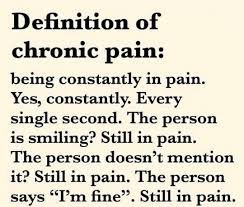
But the pain. It has proliferated every aspect of her day to day existence. It is hard to know – until you know. Chronic pain changes you. This beast got in the way of anything that required too much moving, sitting, or just about anything else. It’s hard to be 20. It’s harder when you are trying to relate to people who don’t need pain meds just to exist. It’s like you’re side by side with them speaking two totally different languages. At some point you either learn the other language or move on. Very few people are fluent in pain.

This transition Meghan and I are working on, where I am trying to transition her into primary responsibility for her care, it is a delicate one. This year was difficult for Meghan for so many reasons, but the reason swallowing her up was the pain. I knew the call would come, and it did.

She called and asked me to schedule and MRI – just to see what was happening. She was stating that another cryoablation was not the path she would go, but she reached out to her interventional radiologist to try to troubleshoot the images. From his lens the tumor was markedly smaller, decreased by almost 2/3 from its original 4.5cm. He could not figure out why her pain was so much worse. He called and spoke with the orthopedic surgeon.

We got word that we should head to ortho to review his thoughts on the most recent images. We were expecting advil 800. He led with – Let’s get it out of there.

Tuck. And. Roll.

When it was almost 5cm he dared not touch it. Now at its current size he thought he could get it. One of the smartest men we will ever meet stared at her MRI images and described the constant pain caused by the location of this ugly beast. HE said to her, all the things SHE has been saying. He said that is in a terrible spot, between the femur and the nerve. He spoke of his access to nerve monitoring technology to ensure the motor nerves were not damaged. HE said she won’t feel relief until it’s gone and cryoablation took us as far as it could. I swallowed hard.

I knew at some point she’d need to let him try. Too many things stood to get BETTER if she got THROUGH to the other side. The surgery now on a markedly smaller tumor was going to require a smaller incision and made it seem attainable.

And before I knew it the surgery date of June 3rd was set.

The only way out is through.

So here we are. Night 3 in the hospital. Another additional dose (on top of her heavy regimen) just got administered as the pain started to creep out of control again.

She needs to move before she can go home. She knows. She needs to move because it is just better for you. She know this too. And she will, but she can’t yet.

There is no frame of reference for this surgery. It’s nothing typical. There is nothing to base the experience on. Just Meghan. We have to let her body lead.

Occupational Therapy got us through a wardrobe change and a move to the chair in the room.It was a 20 minute session of activity. The muscle spasms on the back end of that, would have been enough to make me want to stay still forever.

But tomorrow she will move again. Residents and rounds and PT and OT will visit. The pain care team will come too. What I’m almost certain will not come are our discharge papers. And that is ok. As much as I am desperate to leave, I can not take her home too soon. There are times in our lives where we have to tuck and roll. These times are no strangers to us.

On Monday the surgeon dug in, literally to the bone and extracted two inches of muscle along with this tumor beast.The hope is that once this very ugly painful time passes, that maybe the tumor pain, and the chronic sciatica, and all the other ugly after effects of this beast will go too.

But,not today. And not tomorrow. I am trying my hardest to trust the process….

I am working on managing expectations. My goal is to find a sweet spot in this parent recliner…

The last of the dilaudin is in. That is my clue to close my eyes….

Agony

Last night was the kind of night I never talk about. My girl tells me I let the world off easy because it makes everyone else uncomfortable when we talk about our pain. She insists it’s not my job to lessen our pain so others feel better. For me it’s always the way I go, but the truth is she’s not wrong.

Still it’s hard for me to tell the raw story. I use my writing to sort out all the dark thoughts and bring the light through. And when I can’t do that authentically I usually just stop. I stop writing. I stop talking. I hide.

Last night there was nowhere to go. It was a long dark night with hospital style interruptions every 7 minutes. There was minimal sleep, and unrelenting pain for my girl that was a solid 10/10 for hours.

Last night lasted forever. The gut wrenching cries drowned out the shattering of this mother’s heart when the hard truth that there is literally nothing I can do to help settled in.

The reality that the surgery involved the removal of inches of muscle was evident somewhere between the spasms I could see/ feel from the outside, and the Valium/ oxycodone/ dilaudid rotation that was being tossed at her to at least inch things a hair lower than 10/10.

Not helping at all was/is the feeling of numbness/ diminished feeling all down the front of her leg. She was/is not currently reassured by the theory that it could be nerve swelling. We’d have a better idea if they were able to push NSAIDs. But they can’t. Because that pain in the butt (literally and figuratively) tumor bled…

Having sat by her side through countless surgeries – this one officially wins the “Suckiest Surgery” award.

At some point they will brace her, put her on crutches, and get her moving. We are well aware that “the only way out is through.”

This surgery, where the patient is an adult who has a ton of knowledge of human anatomy and is prepping to be a healthcare professional- this surgery is the hardest. This surgery where mom is a guide on the side, and I can make actually nothing better… this surgery is the hardest.

This time I’m too tired to create a happy ending. This time I’m a 50 year old mom with about 90 minutes sleep in the last 30 hours.

Maybe this was the perfect time for me to tell the story I never share. Our story is one of overcoming, but if I don’t describe the obstacles/ land mines we overcome on the regular, maybe I’m not really doing our story justice.

Our story is one that does not quit, and does not give up. But our trauma from a life of this… it’s so ingrained in who we are that it’s impossible to tease the two apart.

Where does that leave you, well meaning family/ friends/ strangers? Well, it probably leaves you uncomfortable. And maybe for today that’s ok.

What can you do with that? You decide. Never underestimate the value of sitting alongside those who suffer even when you can’t fix it. Maybe especially then.

Either way- you choose. We’re busy using every ounce of strength we have…

#beatingcowdens

Recovery Room- The Waiting Place

The recovery room is the land of mixed emotions. So grateful to see her on the other side of another surgery, yet so terrifying to see her pulse ox dip as they race to get her on oxygen.

Gutting to watch her screaming in pain until finally a cocktail of pain meds knock her out completely.

She should rest. After squeezing in her GRE from 9:30-11:30 she fired off 6 applications to Physician Assistant programs before catching less than 2 hours sleep.

That sense of urgency is our 24/7.

We left home at 4:30- arrived by 5:30 and was in surgery by 7:30.

Three and a half hours later, we got a decent- yet not perfect report and I sit by her bedside… waiting.

Waiting to see if she’ll breathe without oxygen the way she needs to.

Waiting to see how they’ll manage her pain.

Waiting to map out the road to recovery.

Waiting.

He got the tumor. But with it went some healthy muscle too. He got the tumor, but the SOB had a vascular component too.

He got the tumor… but…

There’s always a but.

For now we sit. And wait. And HOPE for all the best answers to chronically complicated questions.

#beatingcowdens
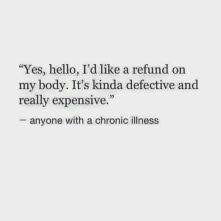
Have you had any surgeries?

It’s an actual question people ask. And I guess it is a fair question for most people. But, we aren’t most people. We are 1 in 200,000 tumor growing Cowden’s Syndrome people.

The question makes everyone in the room uncomfortable because when they start to realize the over 20 surgeries for my girl alone will NEVER fit on the three lines they allow, they ask me to prioritize. But, I have. And the are all important. I even print them out so they don’t have to rewrite them.

It’s like the medication question. Yep. There are a bunch. Yep. They all have value. Yep. They all have side effects. Good for you that you have never even taken a Tylenol. God Bless you and your healthy pain free body. But be careful not to imply that it is even a choice not to control the unrelenting pain somehow. I mean, you want us to behave like decent humans right? Because you can’t have us pleasant and medication free, If you want to be sure maybe we can place a giant tumor on your sciatic nerve. Or let you contend with the after effects of a high flow AVM in your knee, and the shifted patella, or in my case a boatload of hemangiomas on your spleen, and bodies that are just off sides 24/7/365.

I wonder how people would react if I started asking the same question of them…. “What do you mean you haven’t had ANY surgeries?” People find our lives odd. They like to throw well intentioned platitudes. “Is she better now?” “Is it fixed?” “She’s so strong.”

Yep. We’re strong. The weight is heavy. Oppressive at times. The trauma is real and ever present. And to the well intentioned “You should see a therapist…” yep, we’ve got it thanks.

But, no. It’s not “fixed.” It’ll never be fixed because the broken PTEN gene proliferates every cell of our bodies. It has taken a toll on our bodies, and will continue to do so. Active surveillance for cancers and tumors that are flat out likely to grow and show up is just our reality.

It has taken a toll on our spirits. Differently, yet a significant toll on both of us. We are a lot. Chronic issues make even the most well intentioned people uncomfortable. Pain changes you. Trauma changes you.

This life can be so lonely. It is hard to relate to experiences and people when your reality makes most uncomfortable. The isolation becomes easier to manage than the abandonment.

We are a lot.

We are often defensive. Being left behind so often will do that. Being judged too early and too often will do that too.

I think today as I wait for a surgical update I am just tired.

We arrived at 5:30 at 7:30 they rolled her away from me.

Our hopes and dreams right now rest on the resection of her thigh muscle to remove a tumor situated somewhere between her femur and her sciatic nerve.

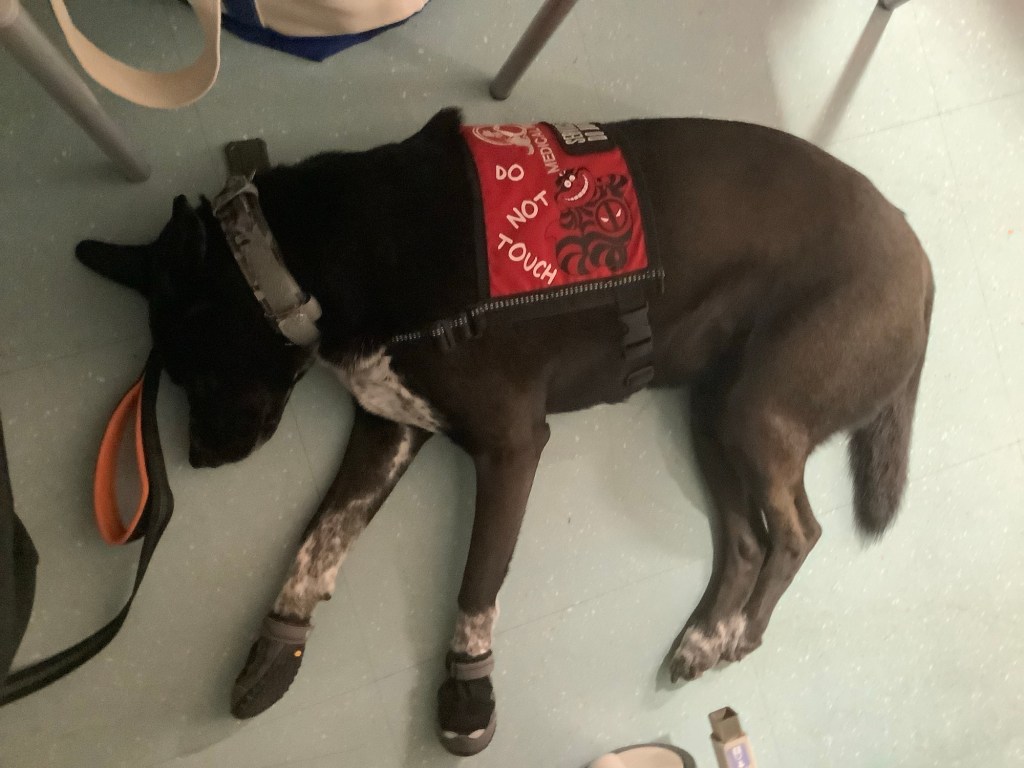
As I sit here with Ella her service dog, praying and waiting, I can’t help but choose hope.

This girl, well woman, is a force to be reckoned with. The number of appointments she has crammed into the last 3 week is ridiculous. She’s taking an EMT class 12 hours a week with her dearest friend, and took the GRE for the second time at 9:30 PM LAST NIGHT, then submitted 6 applications to physician assistant programs for next fall before closing her eyes for about 2 hours.

She is so determined to overcome all the chaos that has been her life and do BETTER for other that she inspires me.

Join me in HOPE and prayer for the successful removal of this tumor with complete and total nerve function in tact.

Because, What if it all works out?

#beaitngcowdens

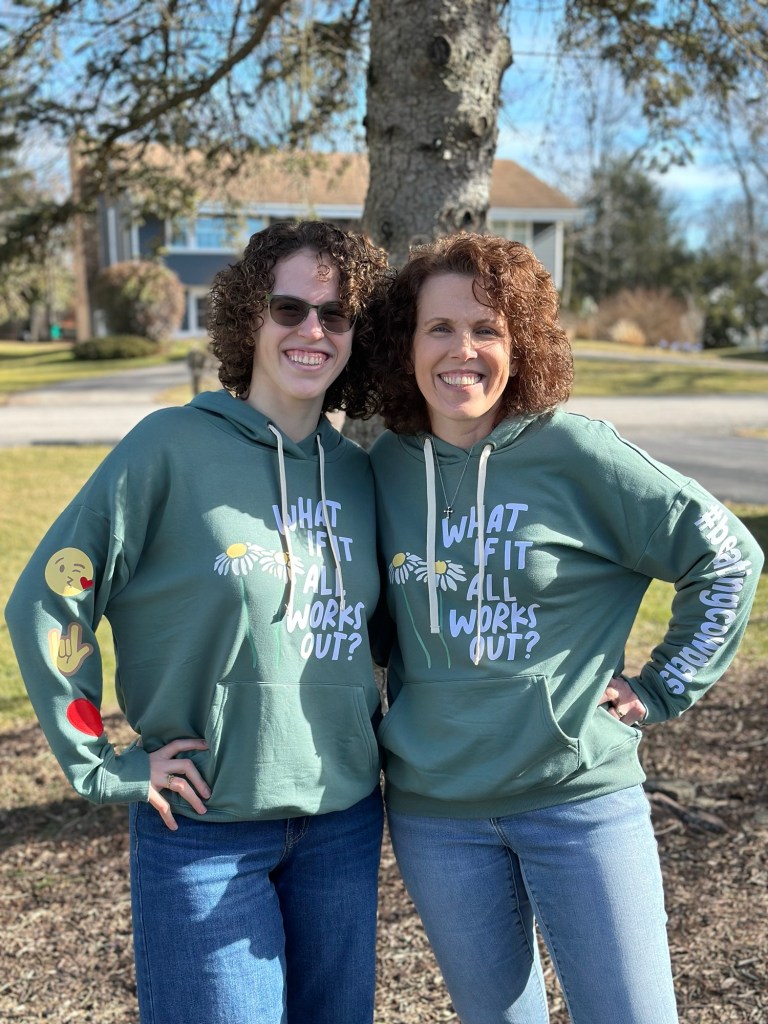
A few photos from our pre-op selfie tradition this AM…

Let’s talk about PTEN

… said almost no one except us. Ever.

That’s why it was intriguing and exciting when Kristin Anothony from the PTEN Foundation contacted me last spring and asked me to share my story on a podcast. Kristin and I have been in touch since before she started the foundation that now represents all of us.

We met Kristin in person in 2018 when she flew to New York for a dinner where Meghan was being honored

We were interviewed for episode 2 of a 5 part podcast. The link is here…

I am constantly humbled by the number of people who interface with this blog. It is mind-blowing to me that people either stumble across this or come here on purpose to learn what our PTEN journey has been.

Back when we were diagnosed in 2011 the internet had sparse mentions of PTEN mutations or anything related to it. But, since I was a mom on a mission my first goal was to create a survival network of others who knew this journey. I connected with Australia, Virginia, California, Colorado, and Alabama. I later found others in places across the globe. And, even though we were all too far for gatherings, in many ways they became my closest confidants.

People dismiss social media, and as a teacher and a mom, I have seen the damage it can do. However, as a rare disease patient, I literally cannot imagine my life without it.

When a diagnosis that is new, scary, and uncertain comes your way, you need hope. You need success stories. You need to know that although it is hard, so hard that sometimes it seems impossible, you are not alone. Like so many other things in life, when used properly, it is good for us. When used in the spirit it was intended social media can be our lifeline, giving us the connections that we so desperately need.

And sometimes if you are lucky, one of your internet lifelines travels to New York from Virginia and you get to hug her in person…

Margaret and I in November 2021

And if you are not that lucky, well, you still are. Because we have an entire team right now, climbing Mt. Kilimanjaro in Africa to raise awareness for us, and to raise awareness of PTEN mutations across the globe.

The rest of the podcasts are linked here. The content is amazing, from Kristin, the founder, and president of the PTEN Foundation, to Ashley and Keegan, a PTEN mom and son who amaze us every day, to Dr. MacFarland and Dr. Frazier, much-needed and appreciated medical professionals helping us navigate this wild ride.

As we head into World Rare Disease Day this week, I encourage you to share your story. Share it here in the comments, or share it wherever you feel heard. It matters. You matter.

…in the basket of the shredder

The primary care, a title he earned through the path of least resistance, abruptly left the practice in December. There was no notice, and I found out quite by accident. But, none of that surprised me. Very little surprises me anymore.

After 12 years of a formal diagnosis, and a whole lot more than that at too many doctors all the time I just shake my head.

Don’t let it define you they say. Except it takes so much time. All the time.

We need someone to check the boxes. In theory anyway. We need someone with a license to order the diagnostics so we can avoid a few specialists. This PTEN team is often left without a captain. I sometimes feel like I am playing all nine positions at once, and the irony that I cannot throw or catch is not lost on me.

I’ve been on the phone for 2.5 hours trying to get a refill on a medication that my college-age, currently out-of-state girl has been taking for years.

The pharmacy can’t fill it without a doctor. I get it. I called the office (HIPAA on file is my lead in… all the time) and they can’t fill it until she sees someone. The last refill was in November. She’s not due home until the 7th of March. I offered to make the appointment and asked them to review her chart and authorize it in good faith.

No. And that was a hard no. A conversation ending block from a medical assistant who undoubtedly is following rules. But the rules are made for situations that fit in boxes. We pretty much live in the basket of the shredder. There are no definable boxes anywhere in our lives.

So, I made the appointment for March 7th for the two of us. Her medication will have lapsed by then. And when it is called in I will end up paying an extra $30 to expedite it. It’s not about the money really. It is that that fee is for people who wait until the last minute. I don’t.

We will go on March 7th together. I already met this doctor at my husband’s appointment to transfer primary care. I asked her if she was willing to take on two patients with PTEN. She looked a bit like a deer in headlights but reluctantly agreed.

I was online this morning trying to print out a guide for physicians who have no idea what our disorder is while trying not to be frustrated that we are once again caught up in the red tape of a system that requires the two of us to see ANOTHER MD who has NO IDEA what we need, so we can tell them what we need, so they can make us jump through more hoops to get it.

I’m grumpy.

I get that the rules have to exist, for the 90 percent of us without rare diseases. And, somewhere I understand why the other 10 percent of us have to suffer.

But, just because I understand it doesn’t mean I like it.

There has to be a better way.

And when I searched I found this site… https://www.ptenresearch.org/for-families-living-with-phts/additional-resources-and-information/useful-links/ Which ironically includes a link back to this blog. Which is both flattering and mind-blowing to me. I can’t do anything besides commiserate!

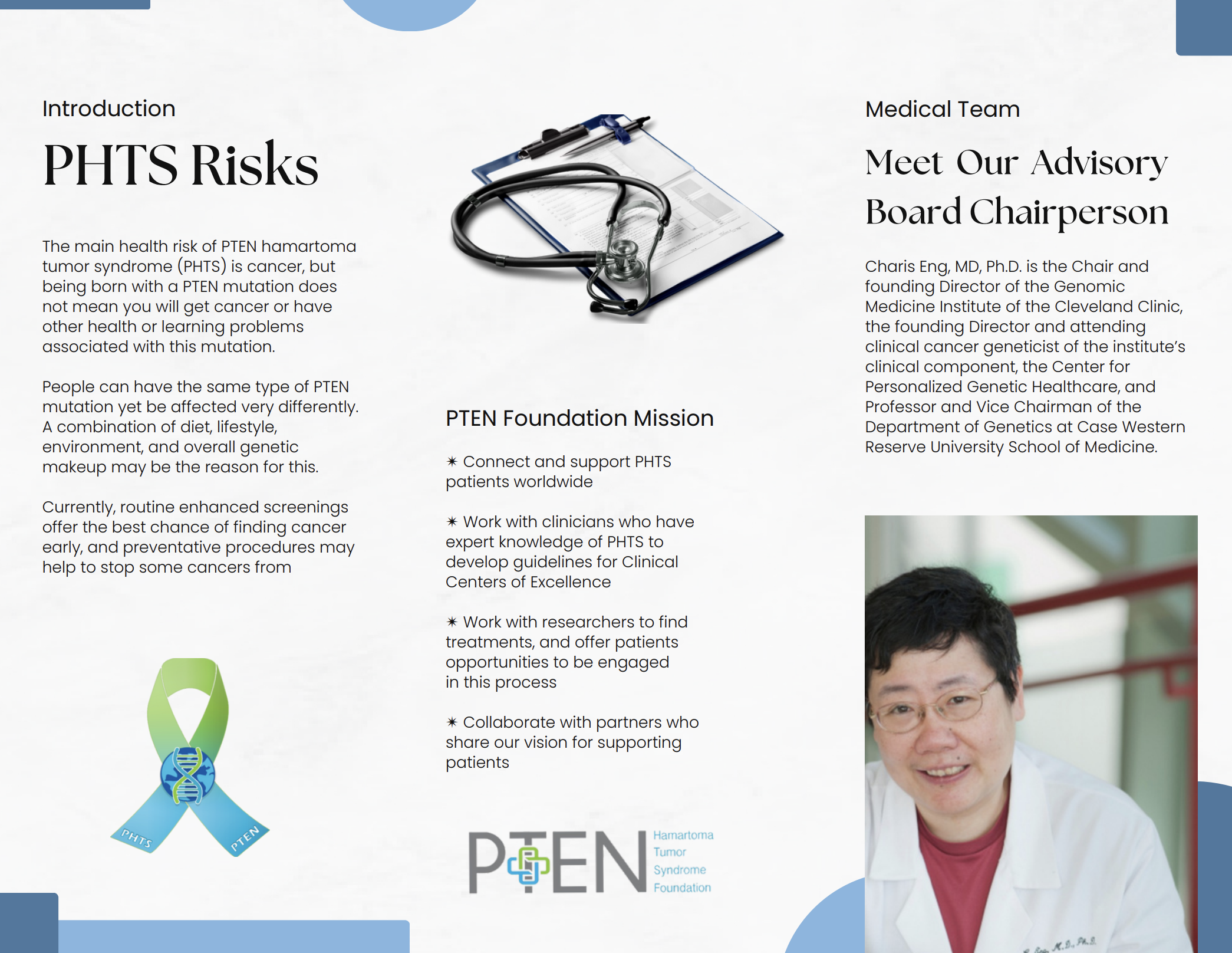
Fortunately, the PTEN Foundation came through again and I found this on their website.

But I am definitely suffering from fatigue while

Dark Days/Finding the Light

I am a March-August kind of girl. I love warm weather and lots of sunlight. Long walks are my favorite. There is nothing that soothes me more than putting on a pair of sneakers, putting my music on, and just going.

I find the fall stressful. Maybe it’s years of being a teacher. There is hopeful anticipation about school in September, but the organization and logistics take forever, and the fall germs are just… a lot.

Before I have time to look up, the days are getting shorter, the leaves are falling, and it is time to pull out the sweaters.

I go through the motions dutifully, cleaning and organizing, but I lack the excited anticipation people have when they smell pumpkin spice and start to see their breath. I just don’t get it.

I think I was always this way, but in fairness, so many emotional events in the fall and winter may have given me the final shove into my aversion for those seasons and bolstered my affinity for my spring allergies.

Given all that, it might seem contrary to say that we decorate early for Christmas, but we do.

Remember, I love the light.

Our tree is up by Thanksgiving, and the lights around the house are on every possible second. I love buying and wrapping gifts. I take comfort in our advent calendar and the excitement of the impending arrival of the baby Jesus.

My faith anchors me through the tumultuous turns life tends to take. It keeps me grounded and focused on the fact that this life is merely a stopping point on a journey to forever.

I grew up in a church. I spent so much of my life there as a child, and a teen that I could navigate the building with my eyes closed. I stayed at that same church after my husband and I met, and it was there that we married and had our daughter baptized.

And as ironic as it is, it is the place I had to walk away from when our worlds got turned upside down with all things PTEN and Cowdens Syndrome. I had to walk away from the place to continue to nurture my faith.

When you grow up in a community of faith, it is hard to accept that reality. I miss weekly services, Angel Trees, and Christmas shows. And sometimes that disconnect can make the dark days extra hard. Yet, in the apparent contradiction that is often reality, my faith has continued to grow through the years.

So, this morning my new normal involved my air pods, my iPad, and my orchids.

Today I “went” to church in Buffalo and in Sarasota, and I never left my house. I sang and prayed and smiled and pondered through Western New York Church Unleashed, and Faith Lutheran Church in Sarasota, Florida. The pastors are comforting and familiar, especially Eric, my brother-in-law in Florida, and also Roger, Jeremiah, and Steve in Western New York whom I have never met. The same internet which often isolates us from each other, keeps me connected to my faith through Advent and beyond.

I took some time with my orchids. My beautiful, perfectly imperfect orchids, that I feel a strong kinship with. Somehow, despite the odds, and without any traditional interventions, they blossom and grow in the most amazing ways.

I spend too much time alone and find it easy to be lost in, and overwhelmed by my own thoughts. Cowden Syndrome is ever present in our minds and bodies, even when the medical drama is on “pause.” The anxiety and anticipation of a lifetime of justifiable worry can make so many things, just hard.

Today I was reminded to give thanks in all circumstances. I was reminded to pray without ceasing, and I was told that you can have joy in your heart, even when you are not happy. 

Life is a contradiction. Emotions yield guilt way too often. But, I have learned that feeling all the feelings is the only way I will survive and thrive in this crazy life.

I do not like the winter. I will never enjoy the darkness. I love the lights of Christmas and I eagerly await the birth of the baby Jesus.

I promise to stop and smell the “orchids” while anxiously waiting for the first sneezes of spring.

Wishing you and yours peace throughout this season.

Ella, Buddy, and Jax bring us so much joy…

Dragon Scales

Art on Instagram@vic.ink_

A dragon?

That’s what I thought to myself when she first told me. That, along with a million other mom thoughts that happen when your 20-year-old declares that a new tattoo is coming.

However, she and I have developed quite a solid, trusting relationship through the years.

We are at a place where she can know that I’d rather she didn’t, but I can still be happy for her when it turns out exactly as she needed it to.

She understands herself, and that is a life goal many never achieve.

When I asked her to put the reasons behind the dragon, she sent me this…

I’ve been poked, prodded, and cut open my entire life, and I’ve never wanted any of it. I needed to do it to survive.

I am 20 and covered in scars that bring those memories back every day. So, I decided I needed to pick what happened to my skin for once, and that’s how my love for tattoos began.

It became a way for me to tell my story and show people what I was about when they saw me. I got to define myself and what I wanted to see on me as well as what I wanted others to see.

This time I picked a medieval dragon design, and I am over the moon with my artist and how it came out.

I spent a lot of my youth feeling weak, broken, and frustrated I couldn’t protect myself, all while reading through fantasy books faster than most could think. So, I got a dragon done because it was always my favorite creature and it was the epitome of strength, with impenetrable scales, and fire breath that meant no one could mess with it. I want to be that, and it’s my everyday reminder to work to a place where I have scales strong enough that no one can mess with me and fire breathe that allows me to take care of myself and keep my mind and body safe.

Oh, and the three stars are for our family of three…

It is impossible not to be proud of her, and grateful for the relationship we have.

Cowden Syndrome can be very cruel. But, my warrior kid is out there every day…

Happy Thanksgiving from our family to yours.

Dirty Little Secret

Remember that killer headache you had last week? Or the time you fell off your bike? Or the day you slammed your finger in the door? What about the time you had a gallbladder attack and you ended up in surgery? Remember your most painful experience. Think about how it consumed you, and how hard it was to get through. Think about the people who cared for you and how glad you were when you were past it.

Remember the support you received after your injury/ surgery/ accident. Remember those people checking in on you and encouraging you. I bet if you think about it, one of the things that carried you through was knowing it would pass. No matter how dark it got, you knew that one day, with rest and medication and therapy and support you would feel better again.

But what if the pain never went away? What if there was always a residual pain, just present enough to occupy precious space in your mind 24/7/365?

I was, yesterday years old when my almost 20-year-old said something I don’t think I had ever really given much thought to. She said some people have no pain. I think I struggled to process what she was saying. So she said it again. To be honest the thought of having no pain was kind of mind-blowing to me. She and I both deal with pain, pretty much all the time. I think maybe it has been easier for me to deal with because I never realized or gave much thought to the fact that this is not the same for everyone.

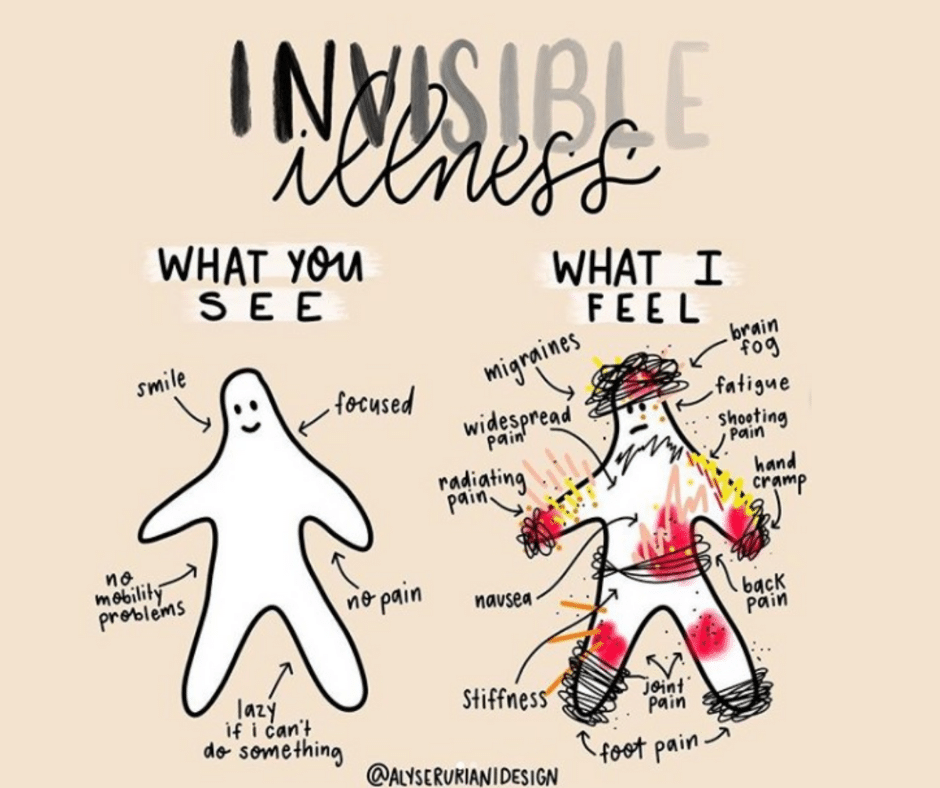
Chronic pain is treated like a dirty little secret. You can’t talk too much about it. It is a buzz kill. It makes a room heavy. It makes people uncomfortable because even the most well-intentioned people do not know what to say or do. And if your chronic pain lasts, well, forever, talking about it is frowned upon. Talking about it can also generate unsolicited advice, “cures,” and shame. Many people cannot imagine that some bodies hurt. All the time. No matter what you do. So they resort to blaming the person who hurts. It must be their fault. They must be lazy, stressed, overweight, have poor eating habits, lack exercise, or they should just “relax.” It must somehow be their fault.

Blaming the sick person is a protection we use. I have done it. I think we all have. We often do it because we are glad it is not us who is sick or in pain. We want some concrete intellectual assurance that it can’t/ won’t be us. So, when you have chronic migraines, and someone asks you why you haven’t found your triggers yet, or when you have joint pain, and you get told to stretch and strengthen, or when your stomach pain is met with “calm down, it’s just stress…” someone is trying to make sense of what you are feeling. In this society, we want a pill or a medication or an easy repair. They are trying to “fix” it, but in doing so often the person in pain is now left also feeling like a failure.

And that patient blaming is not limited to colleagues, friends, and family. Patient blaming is on fire in the medical community. While some practitioners understand that most people do NOT want to spend their whole lives at the doctor, there are others who will find every reason in the world to make you believe you are a depressed, pill-seeking fool.

So those who endure/ survive/ function with chronic pain start to feel like they have a dirty little secret. They feel the pain is their fault and they have something to hide. They feel burdened by this pain that is involved in every single thought and every single move. All day. Every day.

Imagine a song you hate so much. Now imagine that song playing in your ear. All the time. When you try to sleep – it’s there. Taking a shower – it’s there. At work – still there. Out to dinner – yep, still there. The volume button broke. The song is stuck in a loop. It is just enough to keep you distracted but not loud enough for anyone else to hear.

The first few times, you tell someone it’s there. It’s loud. It is annoying. It is hard to concentrate. At some point people tire of hearing this, and tell you to get it fixed, or get over it. They can not even hear the song, but the thought of you mentioning it gets them twisted. So, you stop talking about it. But it NEVER STOPS PLAYING.

So, being aware that you need to do herculean things in a body that has the strength of a sloth, you press on.

You go to school. You meet up with friends. You go to work. You make polite small talk. You pursue career goals. Because you know that we only get one chance at this life and you don’t want to miss it.

And you bargain with yourself. You make little deals along the way with this body that has this terrible song playing so loud that a chunk of your focus is off, and everything you do is just harder than it should be.

You try so many things to get better. But you don’t talk about them. Because hearing someone tell you what should have made you better by now, or listening to the stigma of many alternative treatments has you wiped out and on the defensive. You don’t need to explain. You don’t want to be scammed, or judged. You just want to feel better.

While you are pressing forward, using every ounce of strength that you have to complete daily tasks, it is easy to pull away, even from those closest to you.

It can be so hard to be appropriately sympathetic to a skinned knee when the thought of amputating your most troublesome appendage crosses your mind at least every few days. Your rational mind knows the skinned knee in fact does hurt. Somewhere in the chasm between “I wish someone understood me” and “I want to be a generally decent and kind human” you find the words to say that you hope that skinned knee heals quickly.

Hope. It is the most powerful weapon we have. And sometimes we have to dig it up and polish it off and look at it for a long time. Sometimes we are afraid to dare to hope because we have been disappointed so many times before. But, hope. Hope is everything.

So what can you do if you love someone with chronic pain? How can you relieve some of the burden of this dirty little secret?

Some tips? Remember that it is there. All the time.

Be available for a hug if they want it.

Be encouraging but not patronizing. Use empathy over sympathy. And nudge them forward.

Don’t try to fix it. You can’t. If you could they would have already done it.

Sometimes quiet proximity is the best thing in the world. Being “alone together” can be reassuring.

Believe that they will do all they can when they can.

Don’t stop making plans, but be flexible whenever you can. Pain levels are not on a schedule.

It is hard to be in pain. It can be torture to watch the person you love in pain. By the way, they know how tough it is on you. It is why they worry so much. They have been abandoned before for being “too much” and they don’t want you to go too.

Show your person you want to stay. Show them that despite the dark times, their light is something spectacular you want in your life forever.

It is ok to remind them sometimes that they are a total badass. It’s not a title they were seeking, but it is well-earned all the same.

Cowden Syndrome in and of itself does not cause chronic pain. But, the ramifications of living a life of it, well that can. In our house, we stay active. We stay healthy. We go to work. We go to school. We pray and laugh and love each other. Together. In this house, we know that great things are possible even in the midst of relentless physical pain.

We have goals and we will succeed. So if you see us sitting on the bench, don’t count us out.

We remain….

This topic has been on our minds this summer. Send us your thoughts on chronic pain. We’re especially interested in the best and worst things people have said to you or a loved one in pain.

Meghan and I on our best days will always choose ‘Joy!’

My (Unsolicited) Advice…

I remember sitting at my computer in early 2004, sensing that things were not right with my then 4-month-old. A tumultuous birth was followed by months of colic. I was sure I was doing everything wrong. There were formula changes and pediatrician changes. Then in February of 2004, she was hospitalized with a cellulitis infection on her face. Ultimately we were released from the hospital, but I knew I would never rest too easily again.

We searched and searched as illnesses lumped on top of each other and bled into surgeries of odd growths. We started early intervention for Speech, OT, and PT. There was gall bladder surgery for “milk of calcium,” tonsils and adenoids, and so on. This slid right into an arteriovenous malformation in her knee, and the list just kept growing. We saw so many doctors I could not keep up. It was a giant game of “whack a mole” and there was no end in sight.

I buried myself in the internet, trying to find anything to help me understand why my girl was just not healthy. The internet in 2004 had a fraction of what is available in 2023, but it was a start. I learned to find credible sources and to look up words as I read the vocabulary in complex medical journals.

Although nothing could have prepared me for the diagnosis that came late in 2011 after our PT and angel Dr. Jill sent us to genetics because, well, “something isn’t adding up.” Dr. Jill was right, and it took the geneticist about 45 minutes of skillful conversation, some sneaky analysis of her motor skills, and a tape measure to declare, “I believe I know what she has, and I think you have it too, Mom.”

6 weeks later a genetic test confirmed a mutation on her PTEN (tumor suppressor) gene, and 4 weeks after that mine was confirmed as well.

And suddenly, at 8 and 38 we were members of a very tiny community that seems to be experiencing exponential growth these days. The numbers we got were 1 in 200,000, and the inheritance was “autosomal dominant” although we can not see evidence of it on either side of my family besides me. There were a lot of answers to a surgically rich history of my own that came with the diagnosis.

A good deal of our journey is chronicled in this blog which began in May 2012, and things I have learned along the way are peppered through the posts. But, as my girl turns 20 this summer I have a chance to look at things as the mom of an adult child with a PTEN mutation.

I’ll share this (unsolicited) advice with you:

  1. You ARE an expert on your child and you ARE a valuable member of their team. Go ahead, read that again. The team should be filled with brilliant and well-researched doctors. Who you choose to be the CEO of that team is up to you, as long as the parent, or the child as they age, are a part of the team as well. It is my opinion that a doctor who lacks confidence in their own ability is the one threatened by well-intentioned questions from those on the front lines-the family. If a doctor is upset by your internet searches, do not promise to stand down, ask for guidance as to how to seek reputable sites and worthy information. Most of them have searched your condition soon after they met you, or right before your first appointment. I have even found practitioners searching Google in the ER before seeing us. I do not fault them for not knowing everything. No one can learn about every rare disease in medical school. However, if they make you feel foolish or less than for seeking answers – FIRE THEM. A solid medical professional knows your disease well enough to ask the right questions and is comfortable learning for you and alongside you. You are parenting a zebra, a beautiful, perfect, rainbow unicorn zebra. They should be treated as such. Do not let a doctor who is uncomfortable learning new things, or thinking outside the box intimidate you.
  2. Your child knows something is up. Trust me. No matter their age, their IQ, their ability to verbalize, or their personality, they KNOW. They may not know the details but they know you are worried. Think about how many hours you are spending trying to find answers/ juggle appointments/ balance a job/ fit in additional costs/ care for their siblings, etc. There is no shame in your struggle. You endure what would level most and you push through on all cylinders from the depth of the love a parent has for their child. Just never assume you’re hiding it all. You never want them to interpret your quest for their health as a result of something they did wrong.
  3. Control the narrative when you can. I had an endocrinologist soon after diagnosis plow right through my wishes and explain the cancer risks in depth to my 8-year-old. In hindsight, I should have at the very least fired him on the spot. I did not because I was at “the best” facility. I was intimidated. We do not use that facility anymore.
  4. Tell the truth. I know this seems to go against what I said above, but the trick is simple. Answer the questions they ask you, honestly. I mean everything from, “Yes, the needle for the bloodwork will probably hurt when it goes in. Then, when it comes out and we, (insert something fun here) you will feel better.” Use as few words as possible. Do not restate or belabor the point. When they’re done listening you will know. But, if you are honest and basic with your answers, they will trust you and come back for more when they are ready.
  5. Nobody has all the answers. Take good notes. Bring another set of ears when you can. Establish ways your specialists can be reached if there are follow-up questions. If your specialist does not listen or value you as a critical source of information, fire them. Respect them for what they know. Keep them if they are looking to learn more. If not, move on.
  6. THERAPY. Start early. Search for quality. Hold on until you find quality. Then step away. Let your child have a safe place to work through the physical, mental, and emotional ramifications of this mess. They say they are fine. They seem fine. They are probably struggling. That is not your fault, and you can not fix it all. Truly some kids are just mean and by being different your kid is a solid target. This internet/ social media world is ruthless. They need to be able to say things that are on their mind without worrying about what you will think/ say/ do. And, if you lack a healthy outlet, consider therapy for you too. They are watching. Your ability to handle their diagnosis, and yours if you also are positive, will be something they are observing even when you don’t think they are. Make your own mental health a priority as well.
  7. Make the boring and stressful things as much fun as you can. Quirky selfies, a favorite lunch spot, a special trinket, and some of the best conversations you will ever have may happen on those trips to the doctor. Instead of waiting for the “storm to pass” choose to “dance in the rain.” You are making memories, just not exactly where you had hoped.
  8. Do not underestimate your child. With the right balance of love, acceptance, medical screening, therapy, and time for child-like joy, they will be the absolutely amazing human they were meant to be.

That is not an all-inclusive list by any means. Feel free to drop a comment here or on our FB page about the things you have learned about parenting a child with a PTEN mutation.

I remember in my earliest days after diagnosis there were a few kind souls who pulled me forward. I hope this blog, and knowing you are not alone provides you some comfort.